
ICDA promotes reflection on mental health with the screening and discussion of «My 500 Crazies»
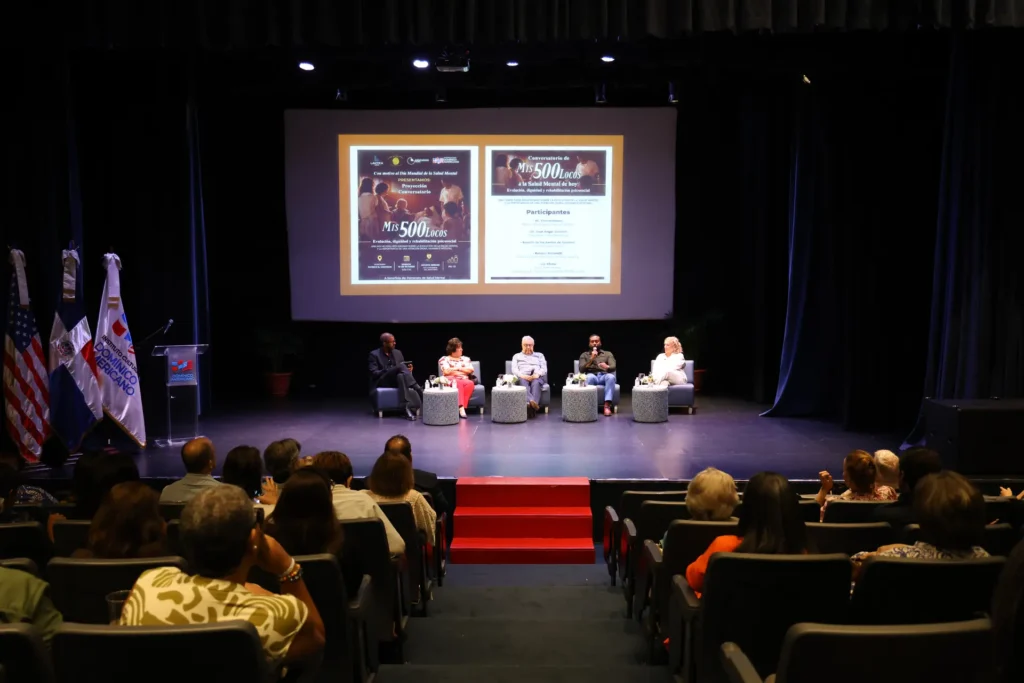
The event brought together medical, psychological, social, and cinematic perspectives to address the evolution of psychiatric care and the current challenges of mental health in the Dominican Republic.
Within the framework of World Mental Health Day, the Instituto Cultural Domínico Americano (ICDA) held on Saturday, October 10, the screening of the film “My 500 Crazies” and the discussion “From My 500 Crazies to Today’s Mental Health,” at the Patrick N. Hughson Auditorium. The activity was held to benefit the Padre Billini Mental Health Board.
The meeting provided a space for reflection on the evolution of psychiatric care, the stigma associated with mental disorders, and the importance of promoting more humane care focused on the dignity and rights of individuals.
Based on the historical reality presented in the film, the discussion connected different perspectives on mental health with the current challenges in the Dominican Republic. Psychosocial rehabilitation, recovery, and inclusion were among the topics addressed during the dialogue.
The panel included Dr. Yino Martínez, psychiatrist and psychotherapist, director of the Padre Billini Psychosocial Rehabilitation Center; and Dr. José Ángel Saviñón, psychiatrist and psychotherapist, professor, researcher, and author. Both contributed the medical perspective to the exchange on mental health care.
Also participating were Roselin de los Santos de Saviñón, M.A., clinical psychologist and Fulbright program alumna; and Rosario Bonarelli, president of the Mental Health Board, who contributed to the dialogue from psychological and social fields.
The cinematic perspective was represented by Ico Abreu, Dominican actor who plays “El Tuerto” in “My 500 Crazies” and Fulbright program alumnus. His participation linked the film experience with the themes that motivated the event.
The day brought together cinema and dialogue as means to bring the public closer to a reality that requires understanding, respect, and collective commitment. It also offered an opportunity to reflect on advances in mental health care and the challenges that remain to promote recovery and inclusion of people with mental disorders.
The Instituto Cultural Domínico Americano thanks the panelists and everyone who supported this solidarity initiative, whose purpose was to contribute to greater awareness of mental health and support the work of the Padre Billini Mental Health Board.
The Embassy of the United States, ICDA, and Ideice present progress to strengthen English teaching in the Dominican Republic
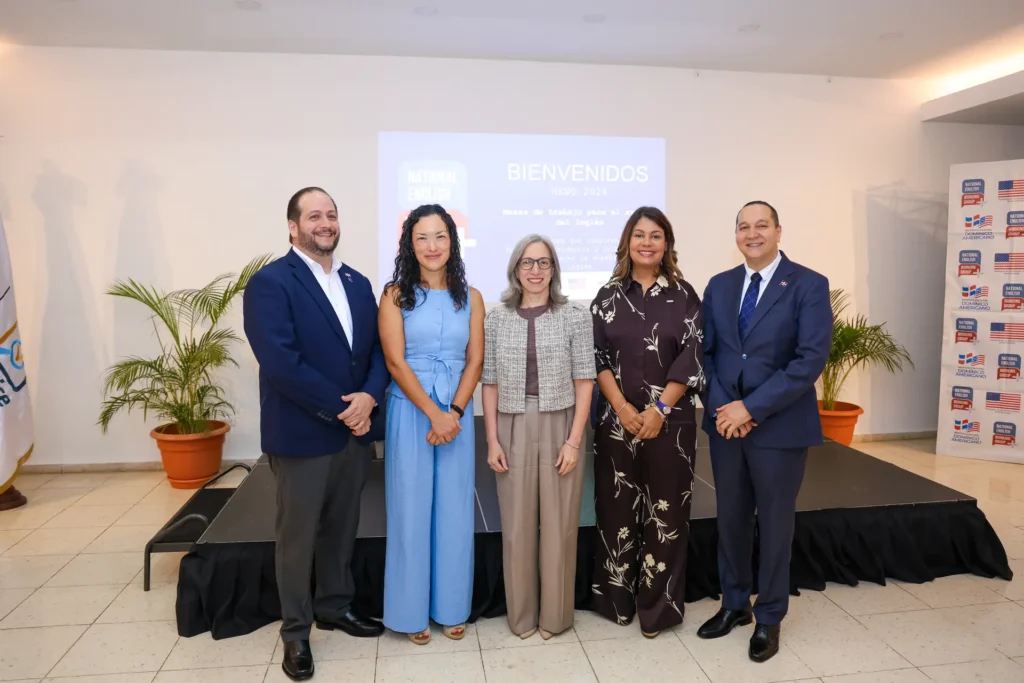
Santo Domingo, Dominican Republic. – The Instituto Cultural Domínico Americano (ICDA) and the United States Embassy in Santo Domingo held the meeting “Progress that Inspires: Training, Evidence, and Collaboration to Strengthen English Teaching,” within the framework of the Working Table for the Advancement of English in the Dominican Republic.
The event, held in the ICDA Exhibition Hall, brought together representatives from governmental and private institutions, educators, and allies to share advances in teacher training and certification, learn about the results of research on English teachers, and explore collaboration opportunities.
The meeting was led by Chelsia Hetrick, Public Affairs Counselor at the United States Embassy; Enrique Fernández Malla, Executive Director of ICDA and Rector of the Universidad Domínico Americano (UNICDA); Jesús Andújar Avilés, Executive Director of the Instituto Dominicano de Evaluación e Investigación de la Calidad Educativa (Ideice); and Ancell Scheker, Deputy Minister of Technical and Pedagogical Services of the Ministry of Education (Minerd).
In her welcome remarks, Hetrick highlighted that the initiatives presented are the result of joint work by various organizations and their commitment to strengthening the capacities of those who teach English. She also emphasized that the Working Table should continue to be a platform to identify needs, connect capabilities, and turn institutional exchanges into concrete actions.
“None of these initiatives belong to a single institution. They have been possible because different organizations have brought knowledge, resources, experience, relationships, and willingness to the table,” she said.
During the meeting, it was highlighted that the Teacher Development Center of the Instituto Cultural Domínico Americano and the Centro Cultural Domínico Americano in Santiago obtained licenses to offer the SIT TESOL Certificate Course, a professional certification program for teaching English designed and accredited by World Learning / SIT Graduate School, a higher education institution accredited by the New England Commission of Higher Education (NECHE).
These licenses strengthen the country’s capacity to offer teacher training and certification with international standards. As part of this progress, participants of the inaugural cohorts of the program, which includes approximately 180 hours of training, observation, teaching practice, feedback, and evaluation, were recognized.
Meanwhile, Ideice presented the study “Profile and Characteristics of English Teachers in the Public Pre-University Sector of the Dominican Republic and Interventions that Contribute to Their Training (2025),” conducted with the sponsorship of the United States Embassy, ICDA, and Minerd.
Andújar highlighted that this is the first official study aimed at understanding the profile and characteristics of English teachers in the public pre-university sector, and it constitutes a starting point to continue researching the teaching and learning process of this language in the country in collaboration with Universidad Domínico Americano (UNICDA).
He noted that the findings invite strengthening competency diagnostics, offering training that responds to the different needs of teachers, and supporting them in applying what they have learned.
In his closing remarks, Fernández Malla expressed ICDA’s willingness to contribute its technical teams and evaluation experience to the efforts that Minerd should lead, with an emphasis on capacity transfer and external validation of measurement instruments.
“English is not a curricular luxury. It is part of the human capital with which this country will compete, research, and communicate with the world,” he affirmed. “Behind every percentage in this report is a teacher in front of a classroom. Our task is to ensure they are not alone.”
During the meeting, the Instituto Cultural Domínico Americano donated books to Minerd for use in schools. The donation was received by Ancell Scheker, Deputy Minister of Technical and Pedagogical Services, on behalf of the Ministry.
The meeting highlighted the contribution of teacher training, research, and inter-institutional cooperation to strengthening English teaching in the Dominican Republic.
UNICDA holds a conference on the constitutional evolution of the United States
UNICDA holds a conference on the constitutional evolution of the United States
UNICDA holds a conference on the constitutional evolution of the United States
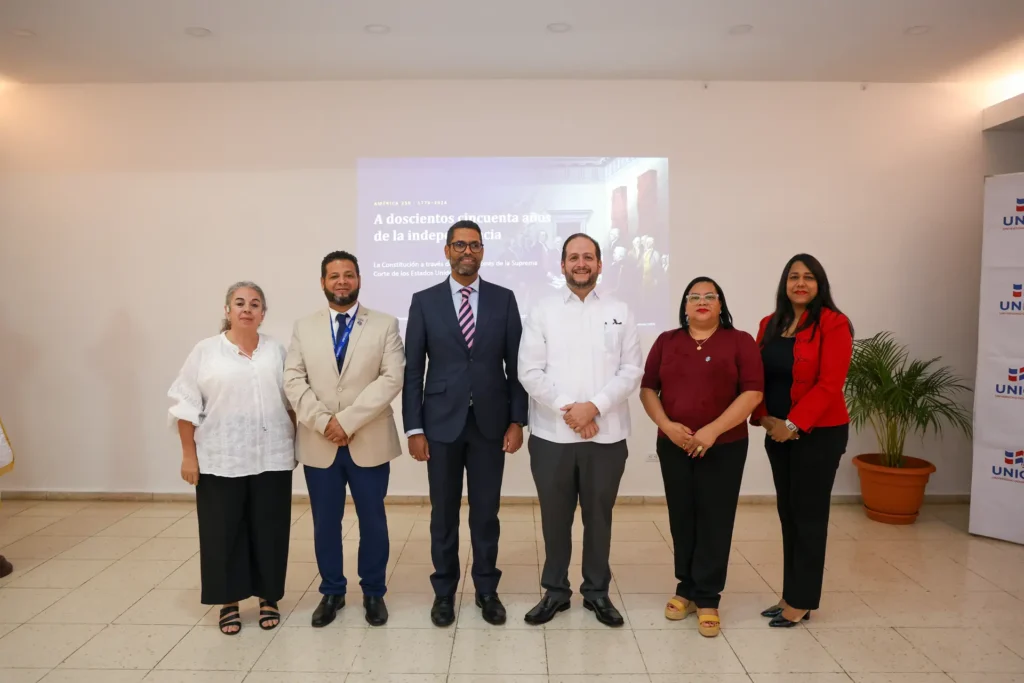
The Dominican American University (UNICDA) held the keynote lecture “Two Hundred and Fifty Years of Independence: The Constitution through the Decisions of the United States Supreme Court,” delivered by Dr. Julio José Rojas-Báez, president of the Inter-American Juridical Committee of the Organization of American States (OAS).
The event took place in the Exhibition Hall of the Earl R. Threan Administrative Building, as part of the commemoration of the 250th anniversary of the independence of the United States. The activity provided a space for reflection on the constitutional evolution of that country and the role of the decisions of its Supreme Court in interpreting the Constitution.
The welcome and opening remarks were given by Enrique A. Fernández Malla, rector of UNICDA. The lecture was aimed at students, teachers, professionals, and the public interested in the history and institutions of the United States.
Rojas-Báez is a lawyer graduated from the Autonomous University of Santo Domingo and a former Fulbright scholar, with a master’s degree in International Legal Studies from American University Washington College of Law. He also has postgraduate training in State Administrative Law and Constitutional Law and Constitutional Justice, as well as extensive experience in teaching and legal practice.
The program included a question and exchange session with the speaker, aimed at expanding reflections on the topic.
With this activity, UNICDA continues to promote spaces for education and dialogue that contribute to critical thinking and knowledge of the history and institutions of the United States, in line with its binational character.
UNICDA and INTEC promote dialogue on the economic impact of inaction against climate change
UNICDA and INTEC promote dialogue on the economic impact of inaction against climate change
UNICDA and INTEC promote dialogue on the economic impact of inaction against climate change
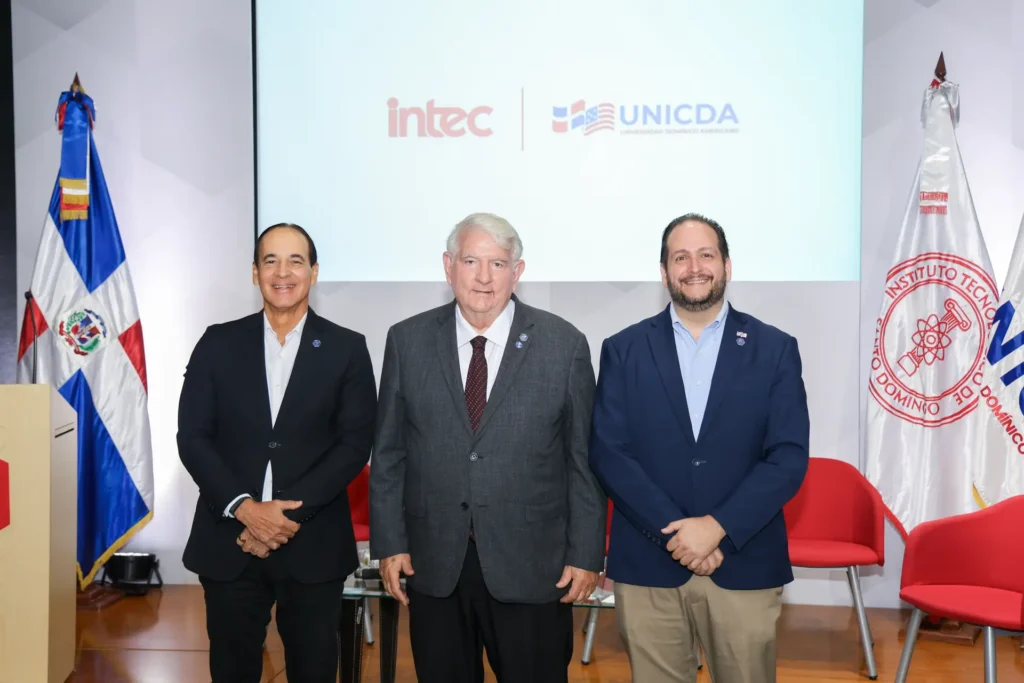
The Universidad Domínico Americano (UNICDA) and the Instituto Tecnológico de Santo Domingo (INTEC) held the keynote conference and panel titled “Inaction on Climate Change: Impact on the Economy of Puerto Rico,” a gathering that brought together national and international specialists to reflect on the challenges this issue poses for the region.
The event took place in the Auditorium of the Social Security Observatory (OSES) at INTEC. The welcome remarks were delivered by Eng. Arturo del Villar, rector of the host institution.
The keynote lecture was given by Eng. Carl-Axel P. Soderberg, member of the Committee of Experts and Advisors on Climate Change of Puerto Rico, former president of the Inter-American Association of Sanitary and Environmental Engineering (AIDIS), and former director of the Caribbean Office of the United States Environmental Protection Agency (EPA).
Following the presentation, a panel was held, moderated by Lic. Enrique A. Fernández Malla, rector of UNICDA.
Participants included Eng. Soderberg; Eng. Martín Meléndez, professor and researcher in the Engineering Department at INTEC; Eng. Mirna Argueta, president-elect of AIDIS; and Rafael Méndez Tejeda, professor of Climatology and Atmospheric Sciences at the University of Puerto Rico in Carolina.
The meeting provided a space for exchange on the economic consequences of inaction on climate change and response perspectives in the region. The question and answer session allowed participation from the live audience as well as those who followed the broadcast via YouTube.
With this joint initiative, UNICDA and INTEC promoted academic dialogue and collaboration among specialists around a topic of great relevance for the sustainable development of the Caribbean.
UNICDA and MESCyT promote scientific and technological research with the launch of the XI CEICYT Congress 2026
UNICDA and MESCyT promote scientific and technological research with the launch of the XI CEICYT Congress 2026
UNICDA and MESCyT promote scientific and technological research with the launch of the XI CEICYT Congress 2026
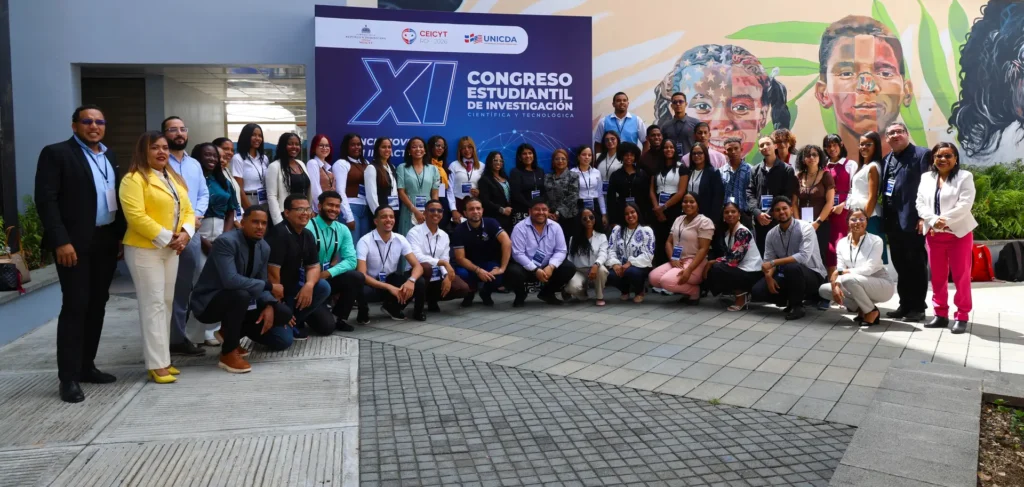
Under the motto “Young Science with Real Impact,” the Dominican American University (UNICDA) hosts the eleventh edition of this national scientific event, held annually to connect young talent with the country’s development.
The Dominican American University (UNICDA), together with the Ministry of Higher Education, Science and Technology (MESCyT), inaugurated the XI Student Congress of Scientific and Technological Research (CEICYT 2026), the most important scientific event for undergraduate students in the Dominican Republic.
The Congress, held on September 16 and 17 at the Patrick N. Hughson Auditorium of UNICDA, is an initiative that began in 2016 as a strategic alliance between the Vice Ministry of Science and Technology of MESCyT and the country’s higher education institutions, aiming to promote scientific culture, stimulate innovation, and link academic production with national productive sectors.
For this eleventh edition, CEICYT reiterates its motto “Young Science with Real Impact,” based on the premise that the projects presented by young people are not merely an academic endpoint but the beginning of concrete solutions for society. The event promotes the idea that student research has the transformative power to influence public policies, become sustainable enterprises, and give voice to communities.
The welcome address was given by UNICDA’s rector, Enrique A. Fernández Malla, who highlighted research as a tool to understand and transform Dominican reality, emphasizing curiosity, critical thinking, innovation, and scientific rigor. He also stressed the importance of integrity and verification of information in the face of advances in artificial intelligence, and the role of English as a tool to access global knowledge. Finally, he reaffirmed the university’s commitment to training professionals capable of generating knowledge and providing solutions from the Dominican Republic to the world.
The event featured prominent authorities from the educational and governmental sectors, including the Minister of Higher Education, Science and Technology, Rafael Santos Badía, who delivered the keynote speech, and the Vice Minister of Science and Technology, Genaro Rodríguez Martínez, who gave the opening remarks.
The keynote lecture was given by geological engineer and former Fulbright scholar Ashley Morales Cartagena, titled: “From Risk Knowledge to Resilience: Science and Research Facing the Seismic Risk of the Dominican Republic.” It analyzed the country’s particular seismic vulnerability, emphasizing the need to foster a prevention culture based on scientific evidence, highlighting the role of national geological and seismic research to generate precise data that allows updating construction regulations, designing community contingency plans, and supporting decision-making in public risk management policies.
This edition of the XI CEICYT is supported and actively participated in by the country’s main universities and academic institutions, including the Autonomous University of Santo Domingo (UASD), the Pontifical Catholic University Mother and Teacher (PUCMM), Federico Henríquez y Carvajal University (UFHEC), the Technological Institute of Santo Domingo (INTEC), the University of the Caribbean (UNICARIBE), the Open University for Adults (UAPA), APEC University, Pedro Henríquez Ureña National University (UNPHU), and the ADRU Research Network (RIADRU).
About UNICDA
The Dominican American University (UNICDA), founded in 2001, is part of the Dominican American Cultural Institute (ICDA), a binational institution created in 1947 to strengthen ties between the Dominican Republic and the United States through education and culture. Over its 25 years of history, UNICDA has established itself as a higher education institution committed to academic excellence, innovation, and comprehensive training of professionals with a global vision, contributing to the sustainable development of the country.
UNICDA strengthens the dialogue with its future graduates
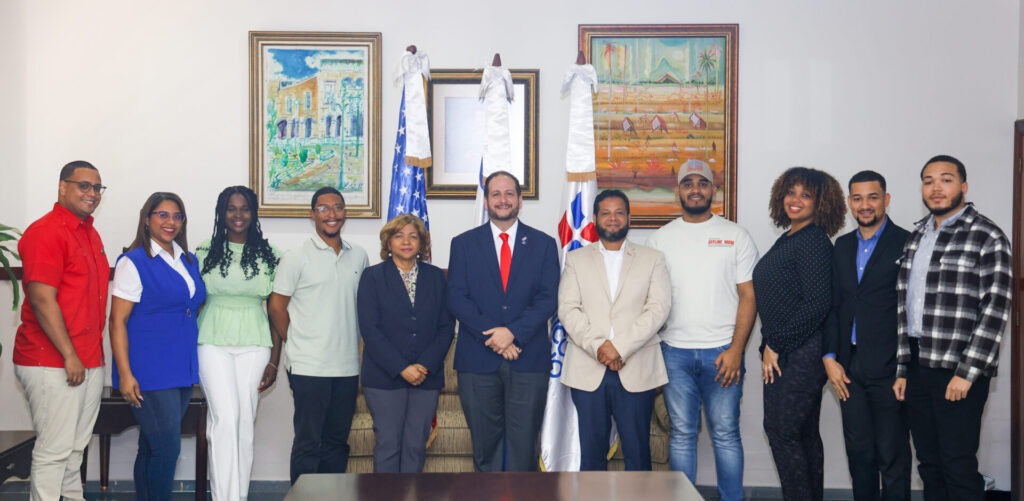
As part of its commitment to active listening and continuous improvement of the university experience, the Dominican American University (UNICDA) held a meeting with students who are about to complete their professional training in the fields of Education, Software Engineering, Systems Engineering, and a Bachelor’s Degree in Tourism and Hotel Business Administration.
The meeting was led by the Rector of UNICDA, Lic. Enrique Fernández Malla, accompanied by the Academic Vice-Rector, Dr. Josefina Pepín, and the Dean of Student Services, Eng. Edwin Salazar, who shared a close and enriching dialogue space with the future graduates.
During the session, the students had the opportunity to share their experiences throughout their academic journey at UNICDA, highlighting the main achievements reached, challenges faced, and lessons learned during their training process.
Likewise, the future professionals presented their perspectives and proposals aimed at continuing to strengthen academic quality, university services, and the student experience, contributing from their experiences to the construction of a university community increasingly close to the needs of its students.
This type of meeting constitutes a highly valuable space for UNICDA, as it allows its authorities to learn firsthand about the concerns, experiences, and expectations of those who are about to become graduates of the institution.
With initiatives like this, UNICDA reaffirms its commitment to a people-centered education, active listening, and continuous improvement, strengthening comprehensive training that prepares professionals capable of positively contributing to and transforming their environment.